Why Chemical Treatment Beats High Pressure Alone
Exterior Cleaning, Pressure Washing, Tampa Bay
Why Chemical Treatment Beats High Pressure Alone
Across Greater Tampa Bay, outdoor hardscapes face non-stop punishment from high humidity, intense UV exposure, and frequent rain. Driveways, pool lanais, and patios in communities like Riverview, Lakewood Ranch, and Clearwater quickly develop unsightly layers of black mold, green algae, and biological grime.
When that happens, the most common reaction is to reach for the highest-pressure nozzle available and start blasting away.
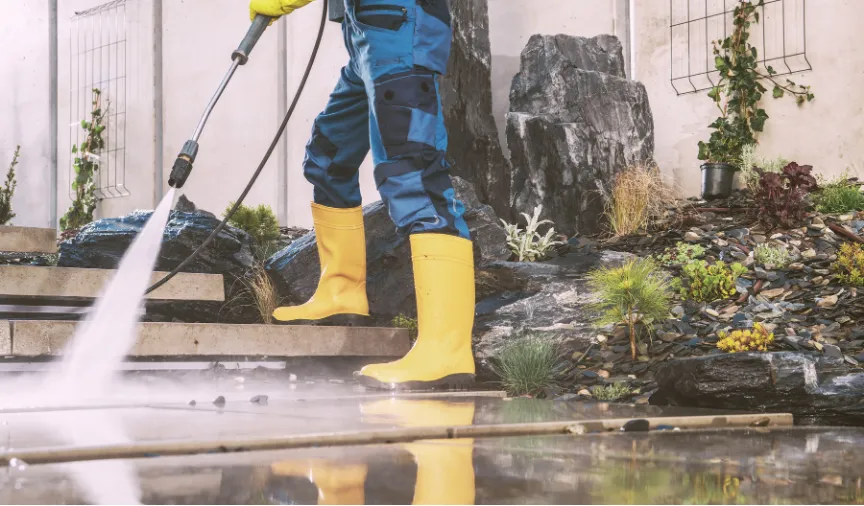
While blasting away a surface with extreme water pressure provides instant visual gratification, it only really tackles a symptom of a problem rather than the causes of it. This can result in permanent damage and as well as costly repairs to the hardscape in the process. True exterior surface restoration requires understanding the difference between mechanical force and professional cleaning chemistry.
Protect Your Hardscapes the Smart Way
Why professional chemistry outperforms high pressure alone in Tampa Bay’s climate
Why Tampa Bay Hardscapes Get So Dirty So Fast
Our humid subtropical climate is paradise for mold and algae. According to the EPA, mold thrives where warmth and moisture are constant, and Greater Tampa Bay delivers both almost year-round. High humidity keeps surfaces damp, frequent rain showers rewet them, and warm temperatures accelerate organic growth on concrete, pavers, travertine, and pool decks.
UV exposure from intense Florida sun also breaks down sealers and surface coatings over time, opening more pores in the material. Those pores trap moisture, airborne dirt, pollen, and nutrients from landscaping runoff. The result? Slippery green algae on screened lanais, black mold spotting on driveways, and dark grime in the joints of paver patios from Riverview to Clearwater Beach.
The Hidden costs of "Blast First" Pressure Washing
Many homeowners and fly-by-night operators assume that more pressure equals a cleaner surface. However, in reality, hardscapes like concrete pavers, decorative concrete, and porous natural stone are actually vulnerable to excessive force.
Relying exclusively on aggressive water pressure washing introduces three major issues that can greatly affect the longevity of their hardscapes:
Surface Etching and Aggregate Damage: Concrete pavers and flatwork have a finished top cream layer. High PSI can strip that layer away, exposing rough, pitted aggregate underneath. Once that smooth top finish is eroded, the surface becomes far more porous and in turn attracts organic stains faster than before.
Severe Joint Sand Depletion: Paver systems rely on the friction created by the sand packed between each stone. Aggressive high pressure blasts out the joint sand down into the base layers, which loosens pavers, destabilizing the entire driveway or patio, and inviting weed growth.
Giving Mold a “Haircut”: High pressure strips away visible top growth, but it does not kill the living root systems or the spores that microscopic pores may harbor. The mold or algae will return with a vengeance within a matter of weeks under the Florida sun.
The Science Behind Professional Cleaning Chemistry: SH + Surfactant
Professional restoration relies on science rather than brute force. Instead of stripping surfaces with pressure, Revive utilizes a targeted chemical treatment combining Sodium Hypochlorite (SH) and professional-grade surfactants.
What is Sodium Hypochlorite (SH)?
Sodium Hypochlorite (SH) is a chlorine-based cleaning solution that you may have already seen in your everyday outdoor bleach products. It is commonly used in professional paving and patio cleaning services as it is very effective in breaking down and eliminating biological matter on contact, down to the root, instead of just removing surface dirt. It acts on the following:
Mold
Mildew
Algae
Lichen
Deep organic staining
Rather than dislodging growth mechanically, Sodium Hypochlorite (SH) sanitizes the stone down to the pores. It eradicates the spore structure entirely, preventing premature regrowth and providing results that last.
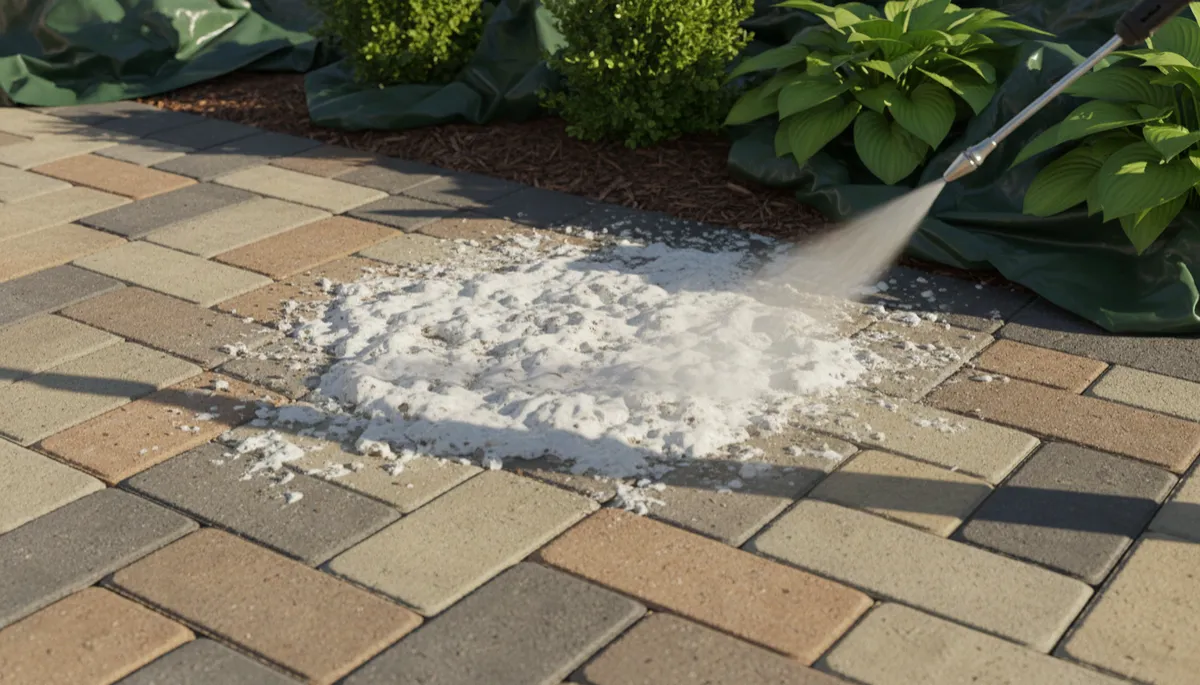
Targeted chemistry removes organic growth from pores without grinding away the surface.
The Critical Role of Surfactants
Water and basic bleach run off quickly, especially on sloped driveways, vertical borders, or textured stone. Professional surfactants solve this issue by acting as wetting and foaming agents:
Reduces Surface Tension: Allows the cleaning solution to sink deep into the microscopic crevices of the stone.
Increases Dwell Time: Helps the treatment cling to the surface long enough to break down grime, dirt, and organic bonds.
Increases Dwell Time: Helps the treatment cling to the surface long enough to break down grime, dirt, and organic bonds.
Approach | Cleaning Mechanism | Risk to Pavers & Stone | Long-Term Result |
|---|---|---|---|
High Pressure Alone | Pure mechanical force (high PSI) | High: causes surface etching, aggregate blowout, and deep sand loss | Short-lived: mold and algae return quickly because spores remain alive |
Chemistry + Controlled Cleaning | SH + Surfactant treatment followed by balanced rinsing | Minimal: chemistry breaks bonds so surfaces rinse clean safely | Extended: spores are neutralized at the root level, preserving the surface |
Dealing With Stubborn Stains and Long-Term Protection
While an SH and surfactant blend tackles organic matter, hardscapes often suffer from non-organic contaminants. Engine oil, mineral deposits, irrigation rust, and efflorescence cannot be solved by pressure or standard wash mixtures alone.
Certain contaminants penetrate deeply into porous concrete and natural stone. Rather than blasting the spot until the concrete is damaged, these situations require targeted specialty treatments formulated specifically for the mineral or chemical makeup of the stain. Targeted specialty treatments are performed to improve stubborn staining where possible without compromising the integrity of the surface.
Cleaning is Only Step One in a Complete System
A clean surface is only the starting point of exterior care. Once a hardscape has been properly sanitized, rinsed, and prepped, it requires structural support and long-term protection:
Inspection & Chemistry Application: Applying the proper SH and surfactant blend tailored to the specific surface.
Deep, Controlled Rinsing: Using dedicated surface cleaners and balanced water volume rather than damaging spot pressure.
Silica Sand Replenishment: After cleaning, joints are refilled using clean silica sand to stabilize the pavers and prepare them for sealing.
Protective Sealing: Applying two coats of a commercial-grade sealer (such as ICT Ure-Seal H2O for compatible concrete pavers) blocks UV exposure, resists future staining, stabilizes the silica sand, and makes ongoing maintenance straightforward.
Protect Your Investment the Right Way
Your hardscape is a major investment in your home's curb appeal and everyday outdoor living space. Treating it with aggressive, uncontrolled pressure causes unnecessary wear, premature aging, and recurring algae issues.
By combining targeted cleaning chemistry, professional equipment, and a multi-step restoration approach, exterior surfaces look better, stay clean longer, and retain their strength for years to come.
